This article is based on a journey made in February 2026 and was updated with the latest available information in August 2026.
This field note covers Nairobi, the train from Nairobi to Kenya’s port city of Mombasa, and the overland journey from Mombasa into Tanzania.
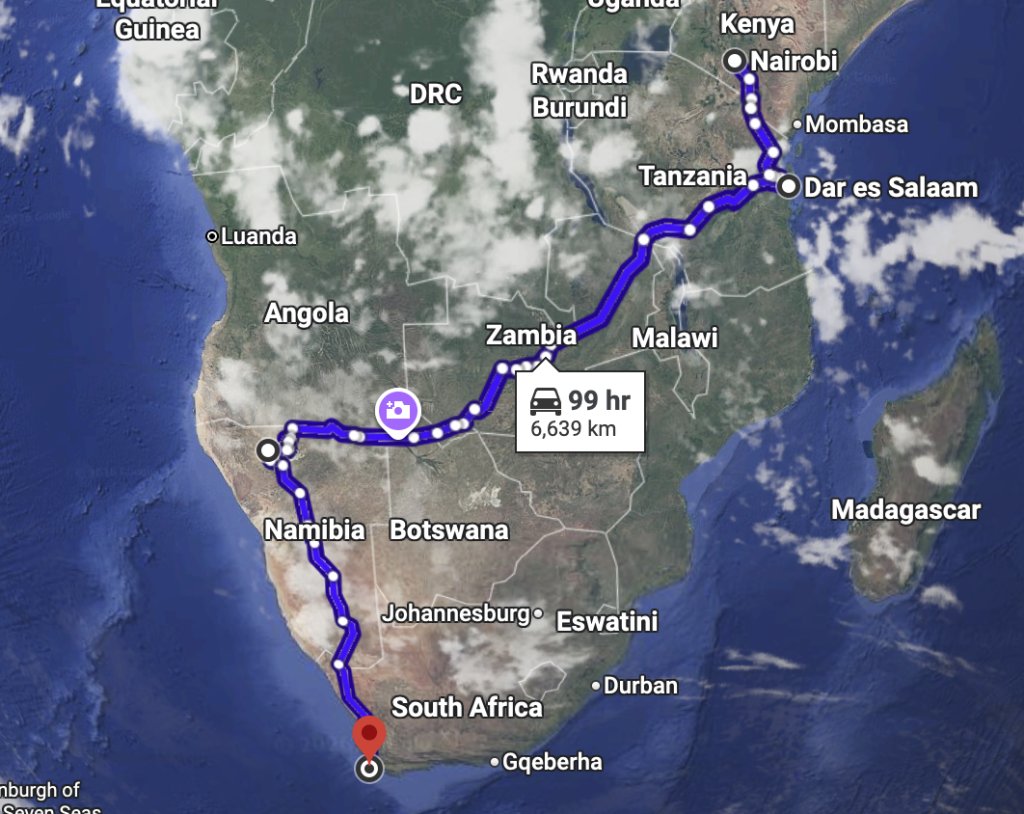
This is Part 1 of an overland journey from Nairobi, Kenya, to the Cape of Good Hope in South Africa. The remaining countries are listed below.
Part 1 Kenya
Part 2 Tanzania
Part 3 Zambia / Zimbabwe
Part 4 Botswana
Part 5 Namibia
Part 6 South Africa
Nairobi, Kenya
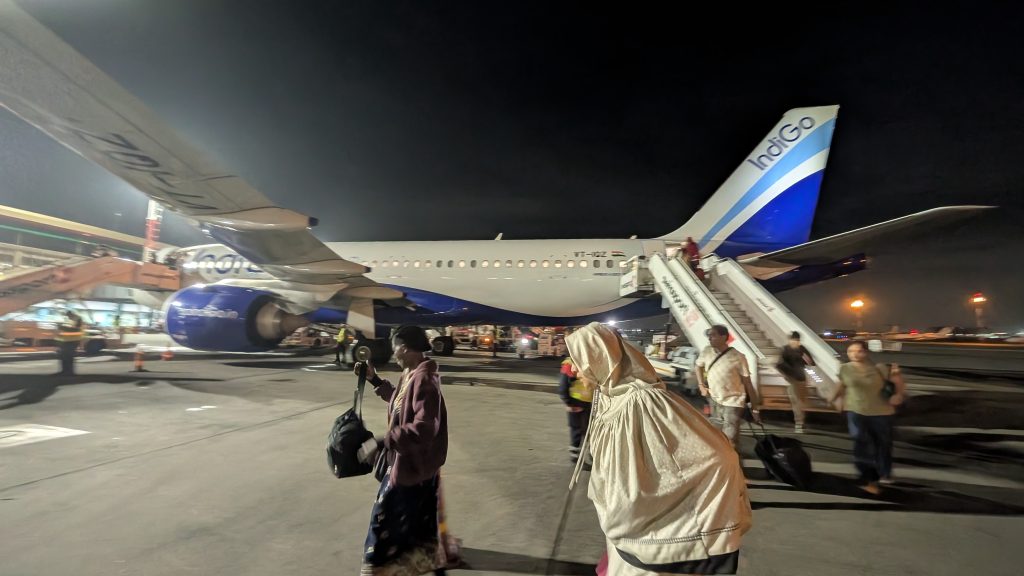
My flight arrived at Nairobi Airport around dawn. Japan’s Ministry of Foreign Affairs had warned of possible major delays due to a strike, but my flight arrived on time. We were taken to a terminal that looked almost temporary, which was not quite what I had imagined for the airport of a major city. From here, I would travel roughly 7,000 kilometres overland to the Cape of Good Hope.
Money: ATMs, exchange and M-Pesa
1 Kenyan shilling ≈ USD 0.0075 (August 2026)
The conversion is easy to understand. I exchanged about USD 50 into Kenyan shillings at the airport, where ATMs were also available. Credit cards work in places such as supermarkets, but the banknotes and coins are interesting in their own right, featuring animals and landmarks. M-Pesa is used almost everywhere in Kenya. It is required for some online bookings, including train tickets, although I managed without it. Registering for M-Pesa requires a Kenyan phone number supplied with a local SIM (as of February 2026).
SIM
Safaricom sold me an eSIM with 8 GB of data and calls for KSH 1,100 (February 2026). Staff completed the setup on the spot. Its broad coverage and availability of SIMs with a Kenyan phone number make Safaricom the straightforward choice.
Getting around Nairobi
I had heard that Nairobi could be unsafe, so I remained cautious. I did not feel in immediate danger during the Uber ride from the airport, but Uber is the practical default for visitors. Cars are widely available, although Nairobi traffic can be severe, so allow extra time. My fares were:
19.61 km: KSH 988 (about USD 7)
16.74 km: KSH 801 (about USD 6).
KICC (Kenyatta International Convention Centre)
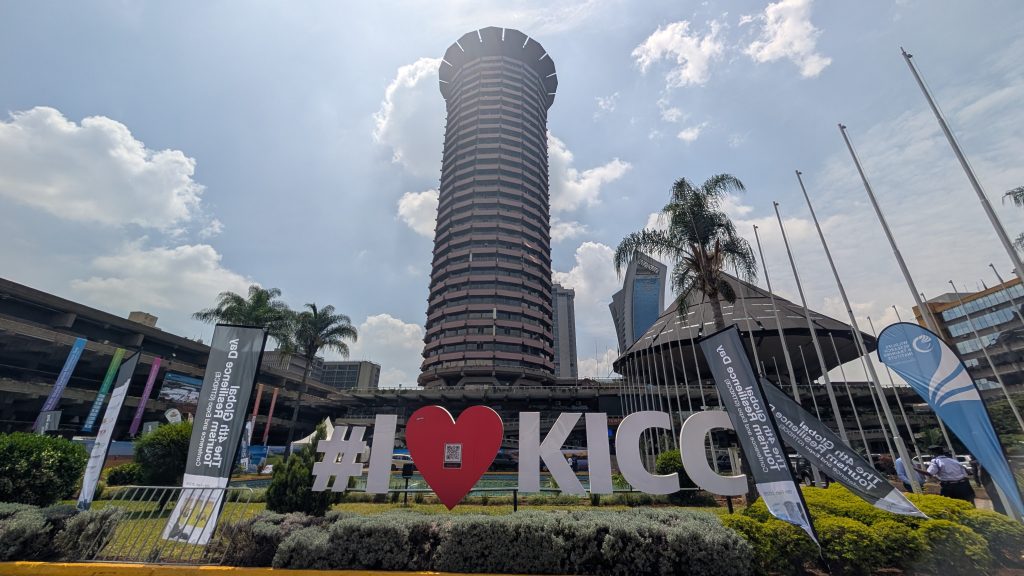
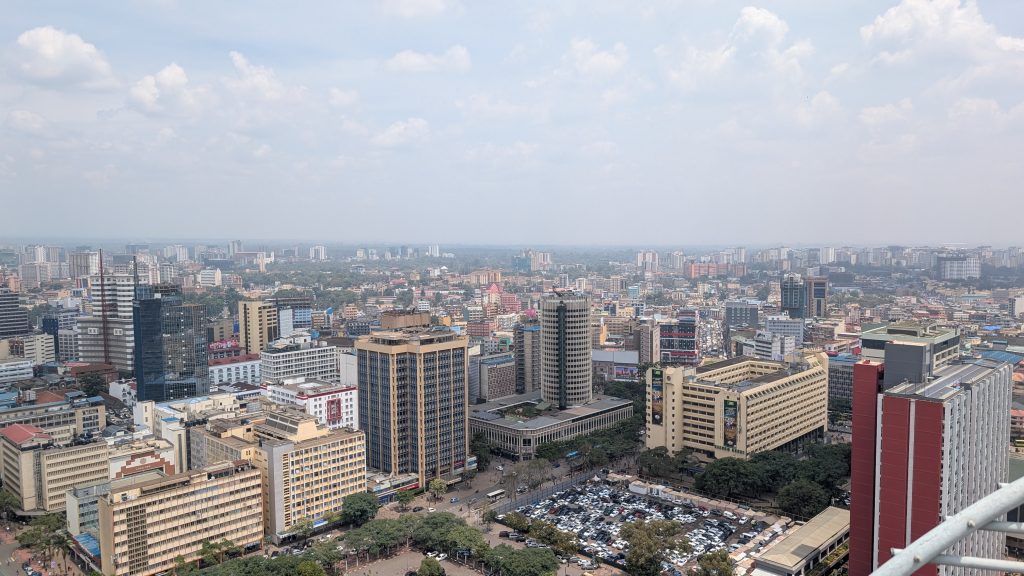
My first stop was KICC, one of central Nairobi’s relatively few conventional sights. The initials stand for Kenyatta International Convention Centre. Although the building is primarily a conference venue, its roof is open to visitors and offers a panoramic view across Nairobi. Admission was KSH 600 (about USD 5), and a passport was required at reception. The lift took about ten minutes to arrive and stopped on several floors, so reaching the roof took some time, but the view was worth it.
Kibera
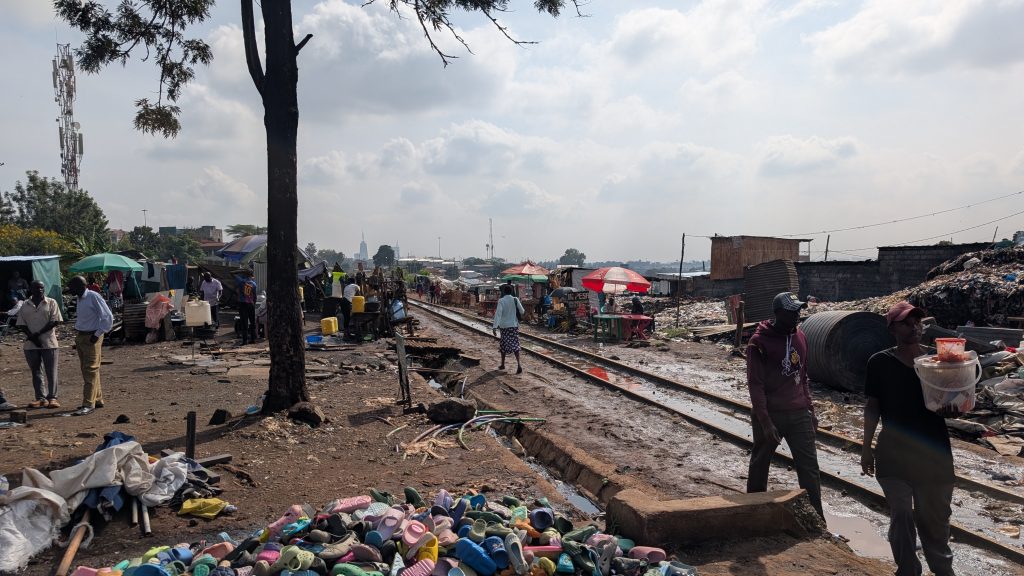
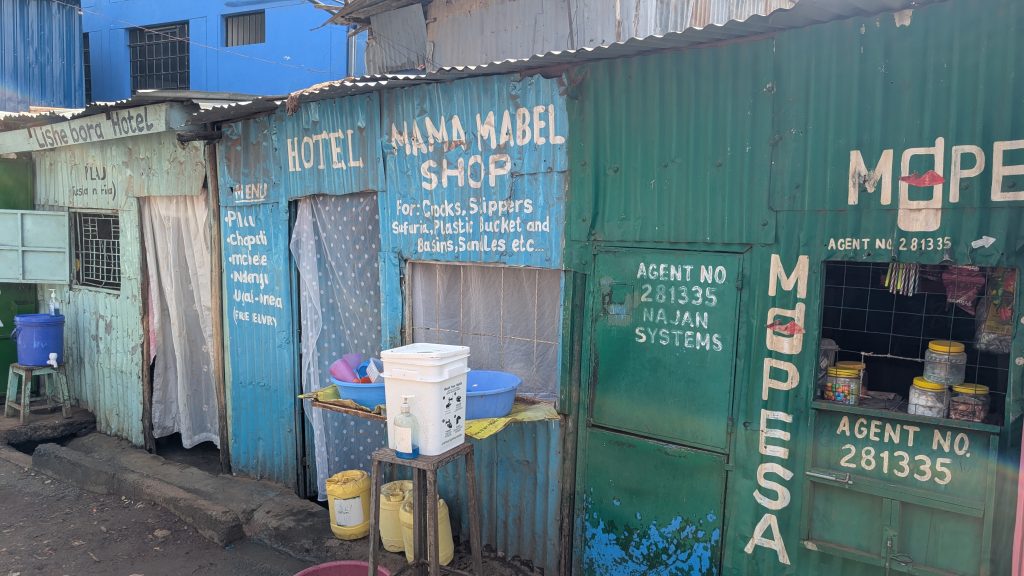
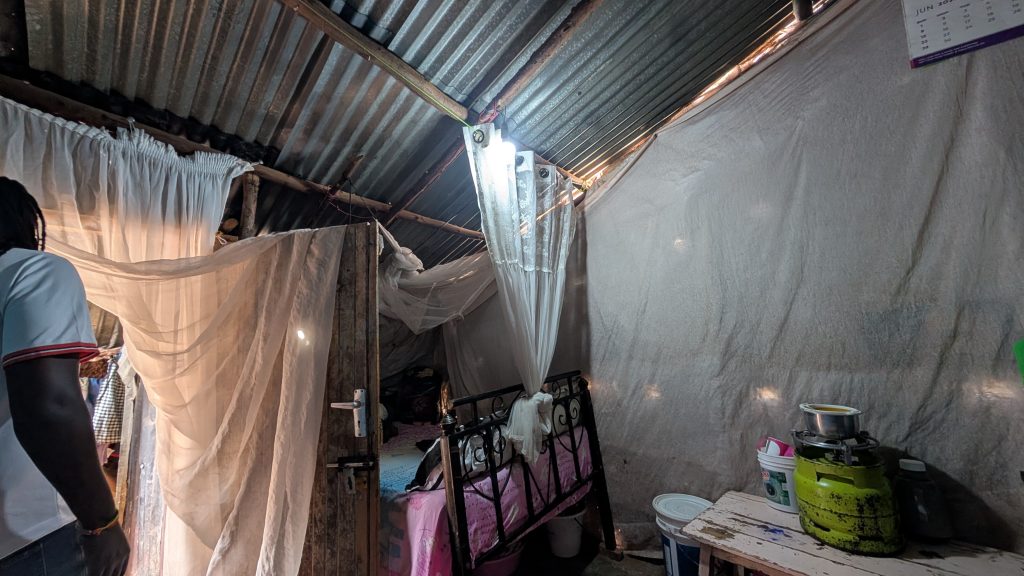
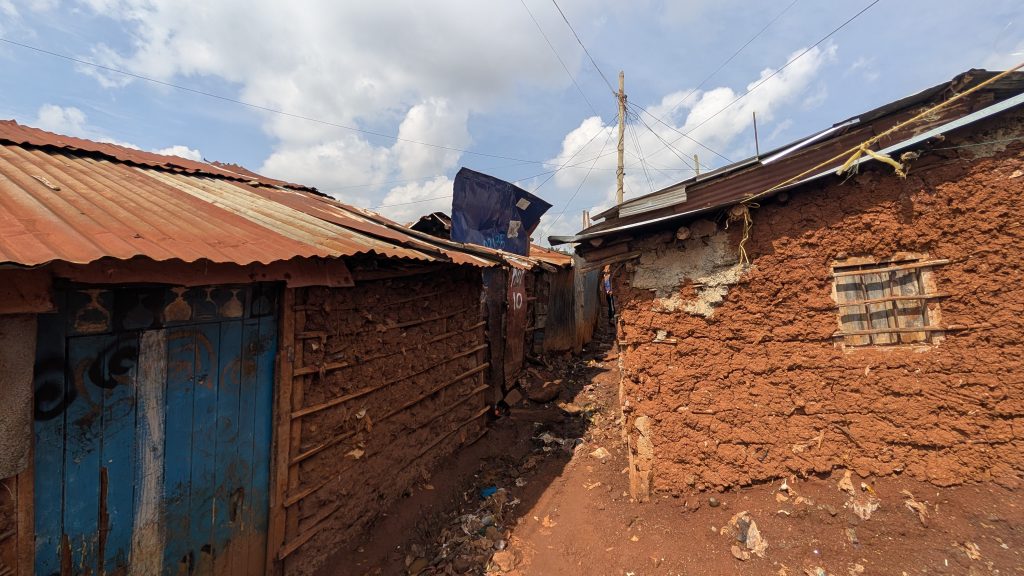
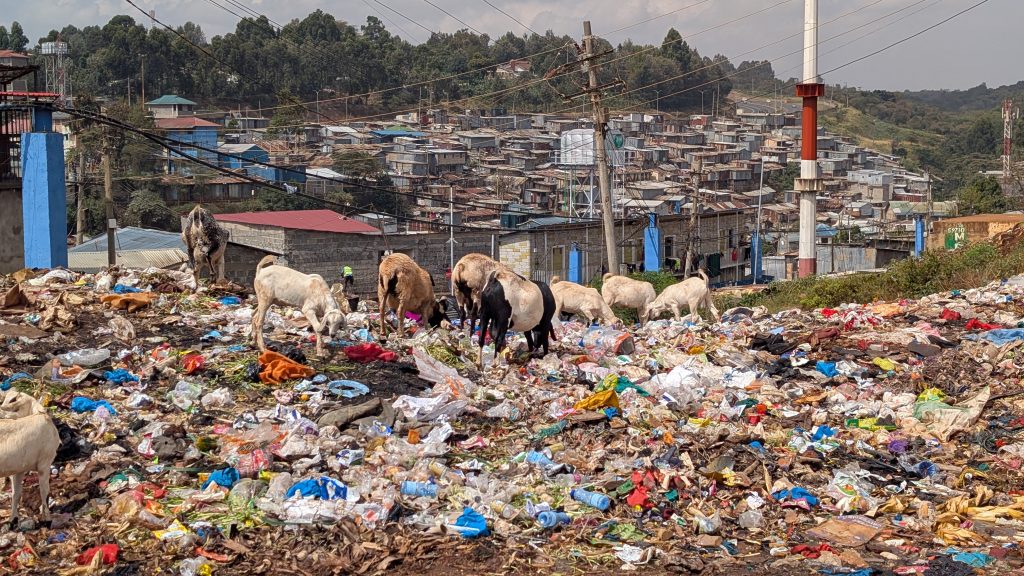
I then visited Kibera, an informal settlement about seven kilometres from KICC. KCOOP, a local non-profit organisation, runs guided visits that make it possible to learn about the area with local support.
KCOOP website
KCOOP on Facebook
After a short briefing at the office, we walked through Kibera. The route began in a more developed formal area; after crossing the railway, we entered the informal settlement. The walk took about an hour. Parts of the ground were uneven, so practical shoes are important. Conditions appeared to have improved considerably, but visiting independently would still carry risk. My guide was from Kibera and greeted people throughout the walk. The tour’s safety clearly rests on the trust between KCOOP and residents. The fee was about USD 12.
Overland from Kenya to Tanzania
The first leg south from Nairobi was into neighbouring Tanzania.
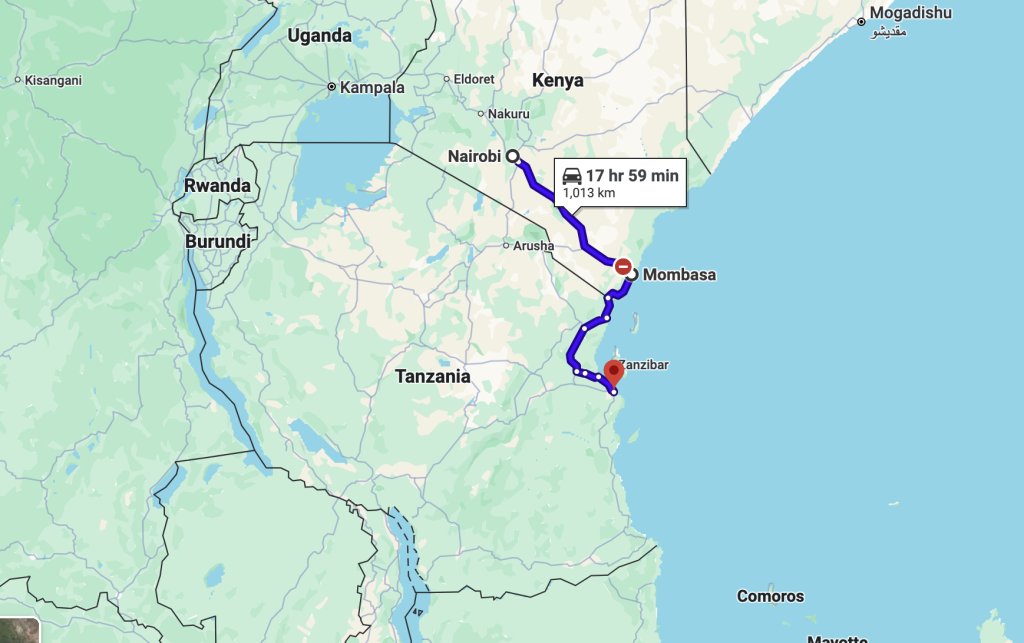
There are two main overland routes from Kenya to Tanzania: an inland route towards Kilimanjaro, and a coastal route towards Dar es Salaam and Zanzibar.
I chose the coastal route because I wanted to visit Zanzibar and later take the TAZARA Railway from Dar es Salaam.
The coastal route runs Nairobi → Mombasa → the border → Dar es Salaam.
Nairobi to Mombasa by train (SGR)
I first travelled from Nairobi to Mombasa on the SGR, sometimes called the safari train because it crosses the open grasslands.
Timetable and booking details
Route:
Nairobi Terminus – Mombasa Terminus
Journey time: About 5–6 hours
Fare:
First class: around KSH 4,500
Second class: around KSH 1,500
Frequency:About three trains per day
Booking:
My train was almost full, so booking in advance is advisable. However,official websiteonline booking requires a Kenyan phone number and an M-Pesa account. I therefore paid roughly twice the official fare and booked through Bookaway.
For the latest information as of August 2026, check the official website.
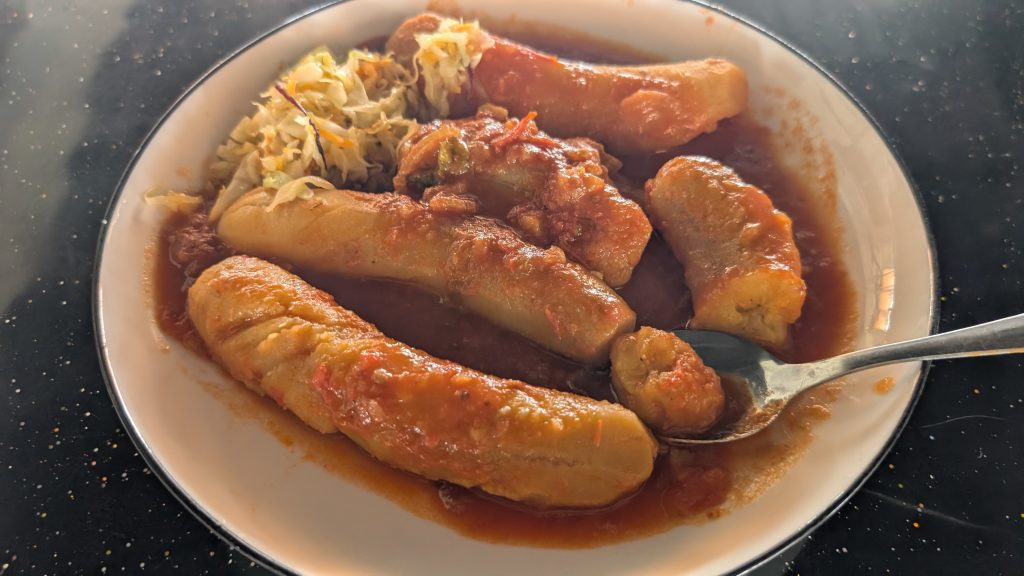
I headed to Nairobi Terminus. Nairobi is not particularly cheap: a meal and drink at a slightly expensive restaurant near the station cost KSH 700, or about USD 5. Unable to make much sense of the menu, I ordered Matoke Plain. It looked like a banana but tasted like a potato covered in tomato sauce. It was good, although I began to tire of it after about a quarter of the serving.
Update:
I later learned that matoke really is banana, not potato. It is a cooking banana, although it tasted entirely like potato to me.
The station is new and impressive. I had heard that baggage checks were extremely strict, but they felt slightly less thorough than at an airport. My second-class carriage had four-seat bays, and the train ran broadly on time.
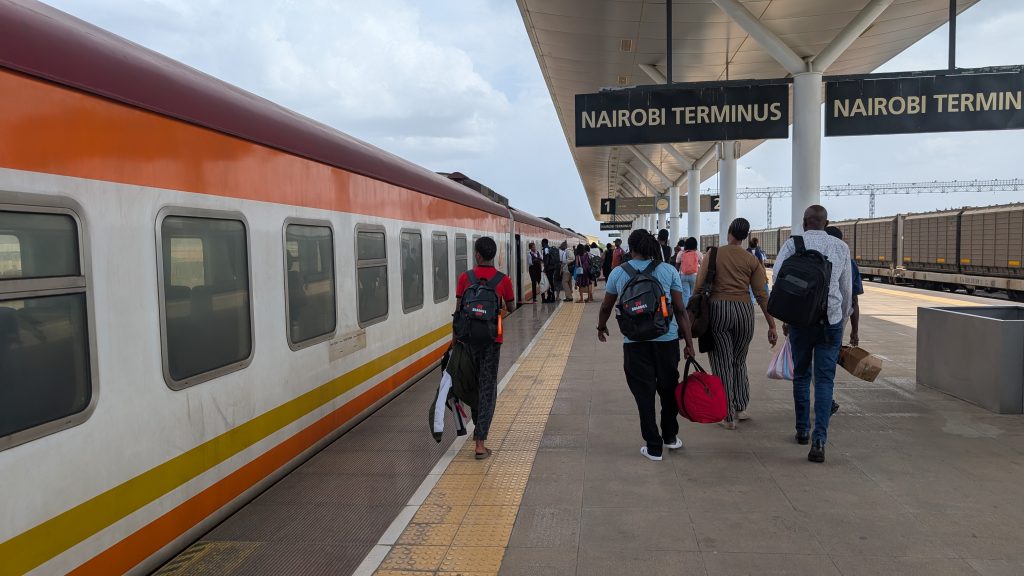
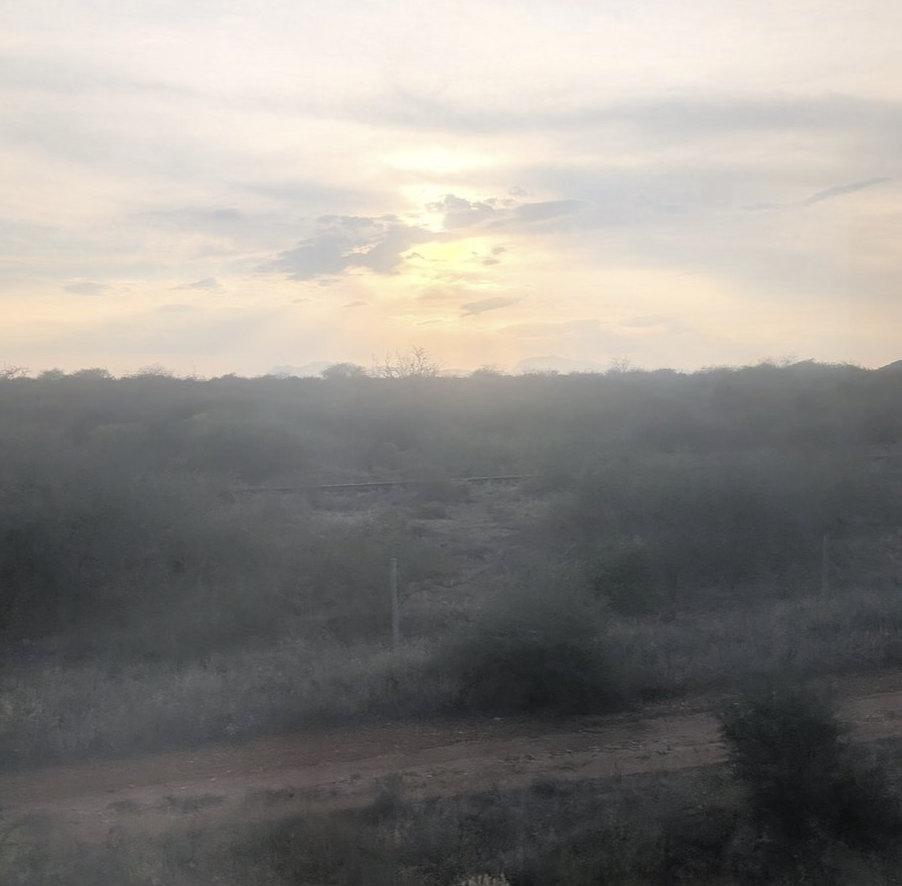
Despite the safari-train nickname, I saw no wildlife, and the windows were cloudy.
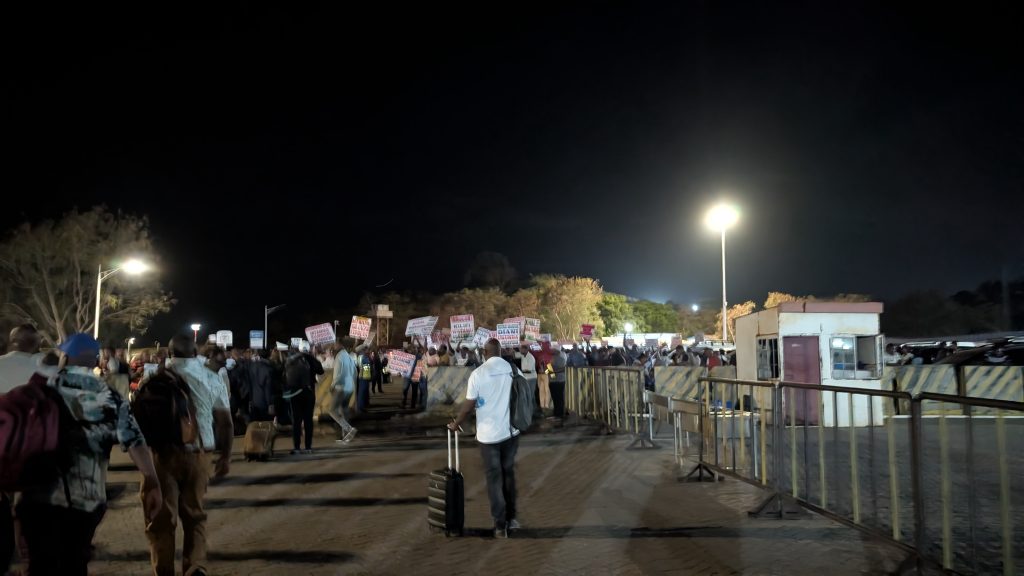
I arrived in Mombasa after about six hours. It is said to be safer than Nairobi, but it was already after 9 p.m. I made my way past the crowd of taxi drivers and went straight to my accommodation.
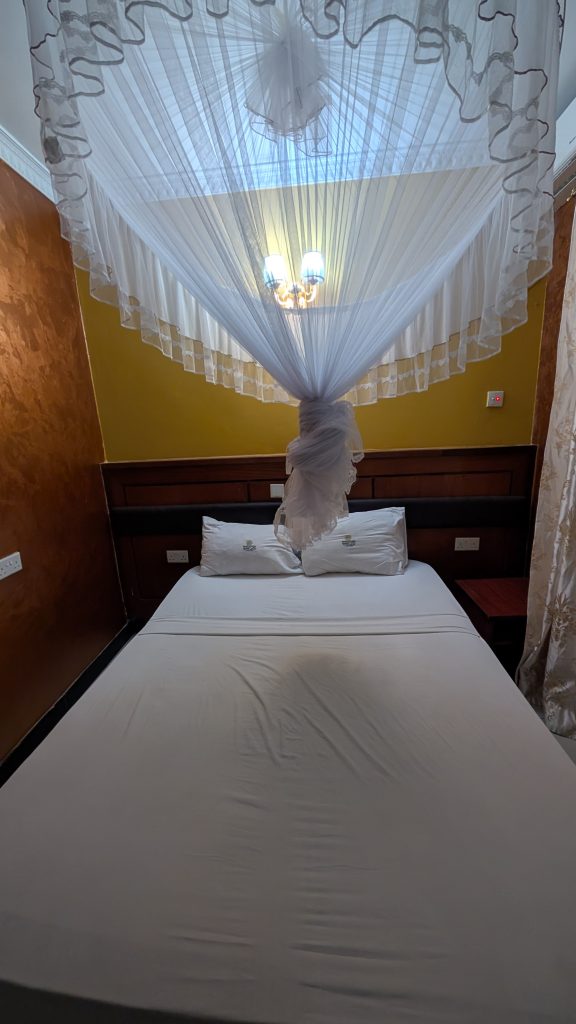
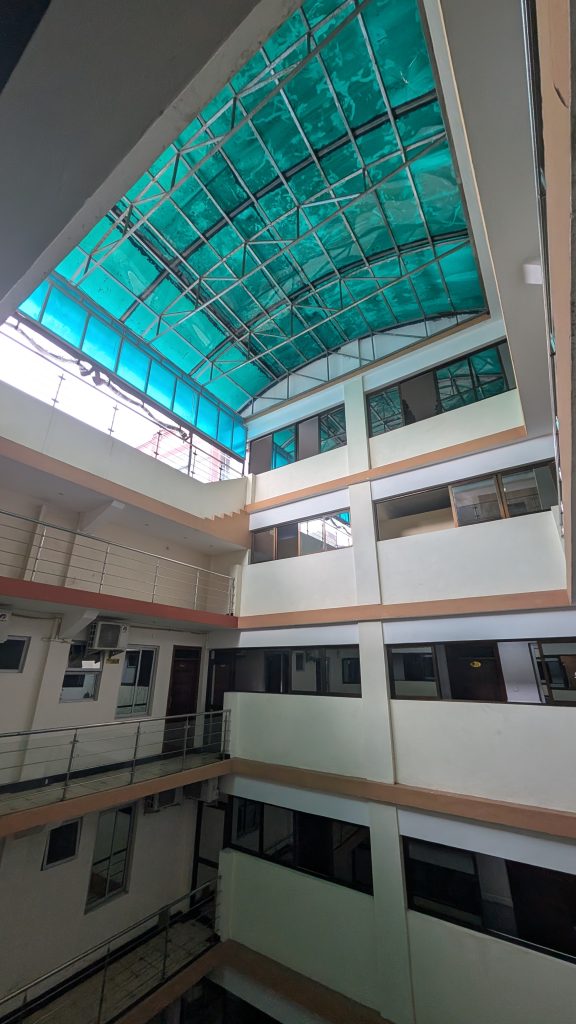
There was little point in economising immediately, so I paid about USD 24 for a private room.
Mombasa to Dar es Salaam: crossing the border
I travelled from Mombasa to Dar es Salaam by bus.
Booking, timetable and boarding point
Some buses can be booked online through 12go, but buying locally is cheaper. Online fares are around USD 31, while tickets cost about USD 12 locally. I used Tahmeed Coach and bought the ticket at its local office. Seats were still available on the day, and the bus had air conditioning. Several departures appear to run between 5 a.m. and around 11 a.m. Because overnight bus operation is prohibited, the roughly nine-hour journey to Dar es Salaam needs to leave Mombasa during the morning.
Tahmeed Coach office and boarding point
https://maps.app.goo.gl/vYWPqgSi3jxc8z5S6
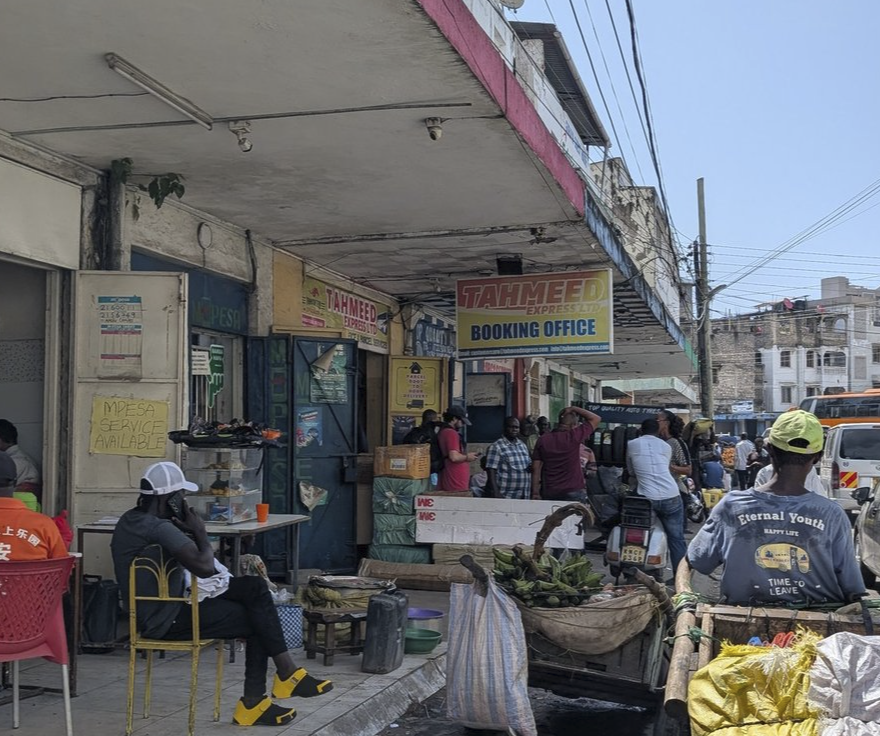
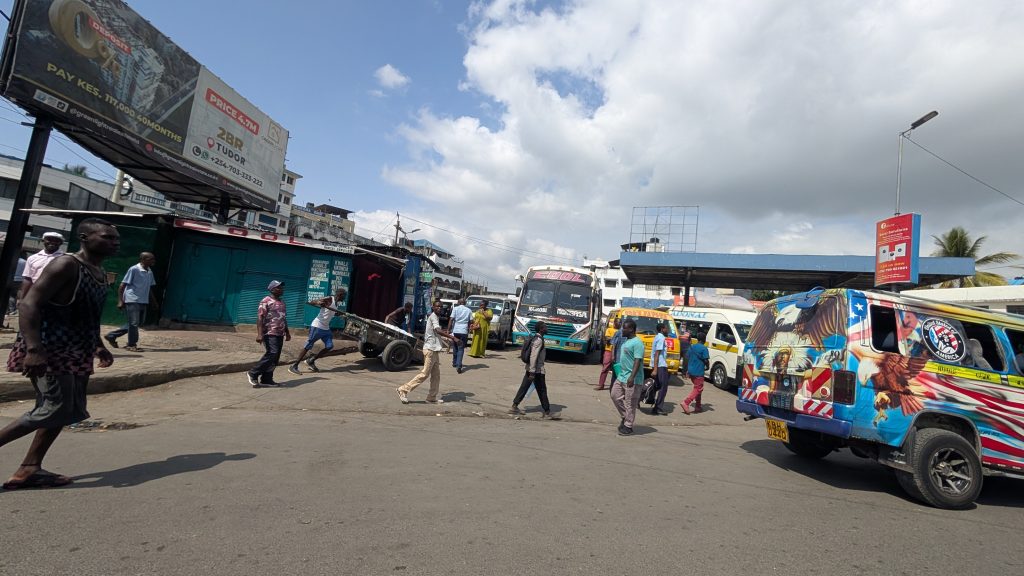
Large bus terminals attract several kinds of scams, yet without asking local people it can be difficult to work out which bus to take. Baobab trees and cattle passed outside the window.
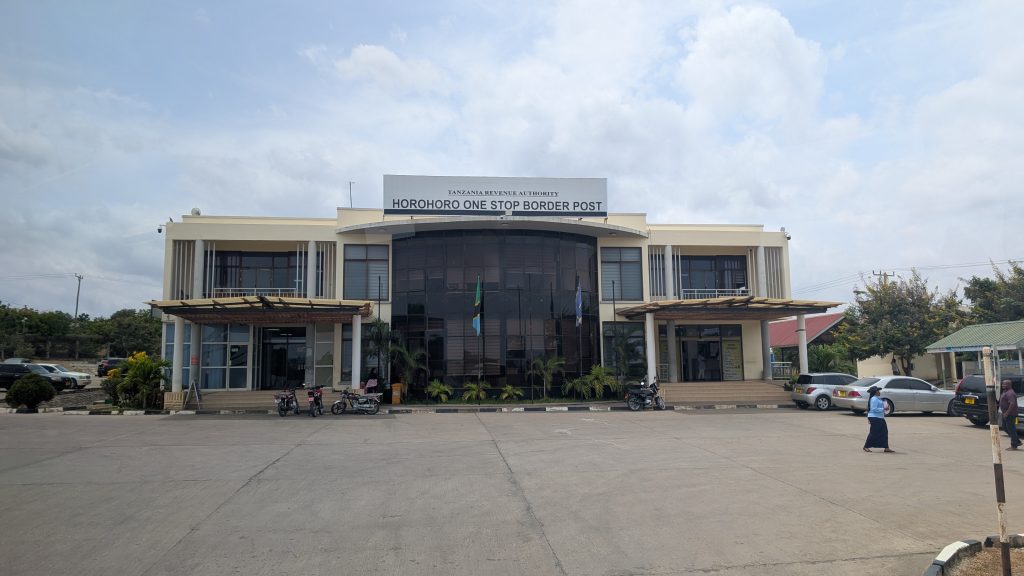
After about four hours, the bus reached the Tanzanian border. Tanzania had announced that visas on arrival would gradually be discontinued, but in February 2026 I was still able to obtain one at the Horohoro crossing, apparently for USD 30. An officer took me to a separate room and asked a few detailed questions about my reason for entering. The conversation was calm and took about five minutes. The border also had currency exchange and several stalls selling snacks and SIM cards.
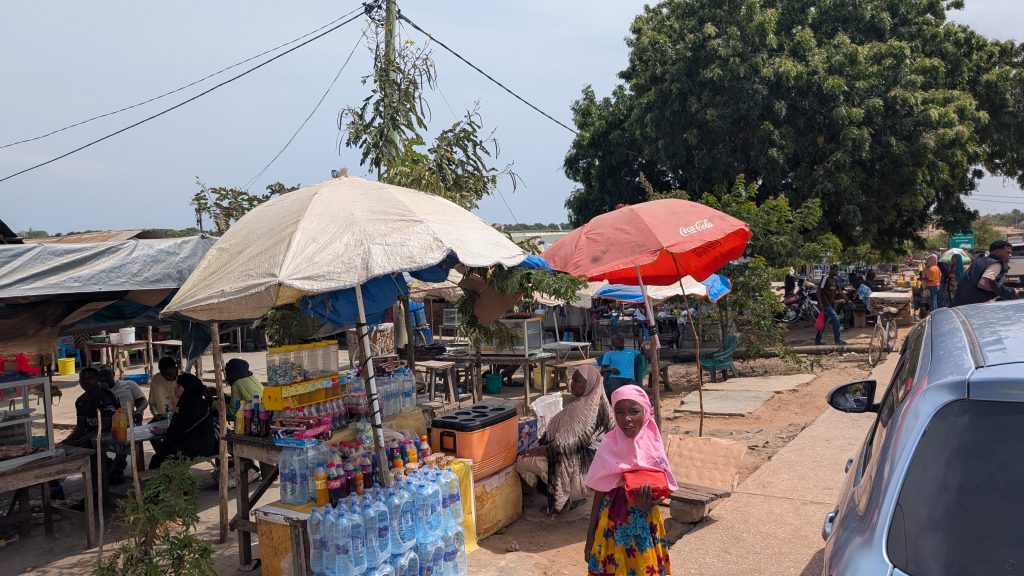
The journey had felt relatively short up to this point, but the remaining distance to Dar es Salaam seemed endless. The rest stop was the only relief.
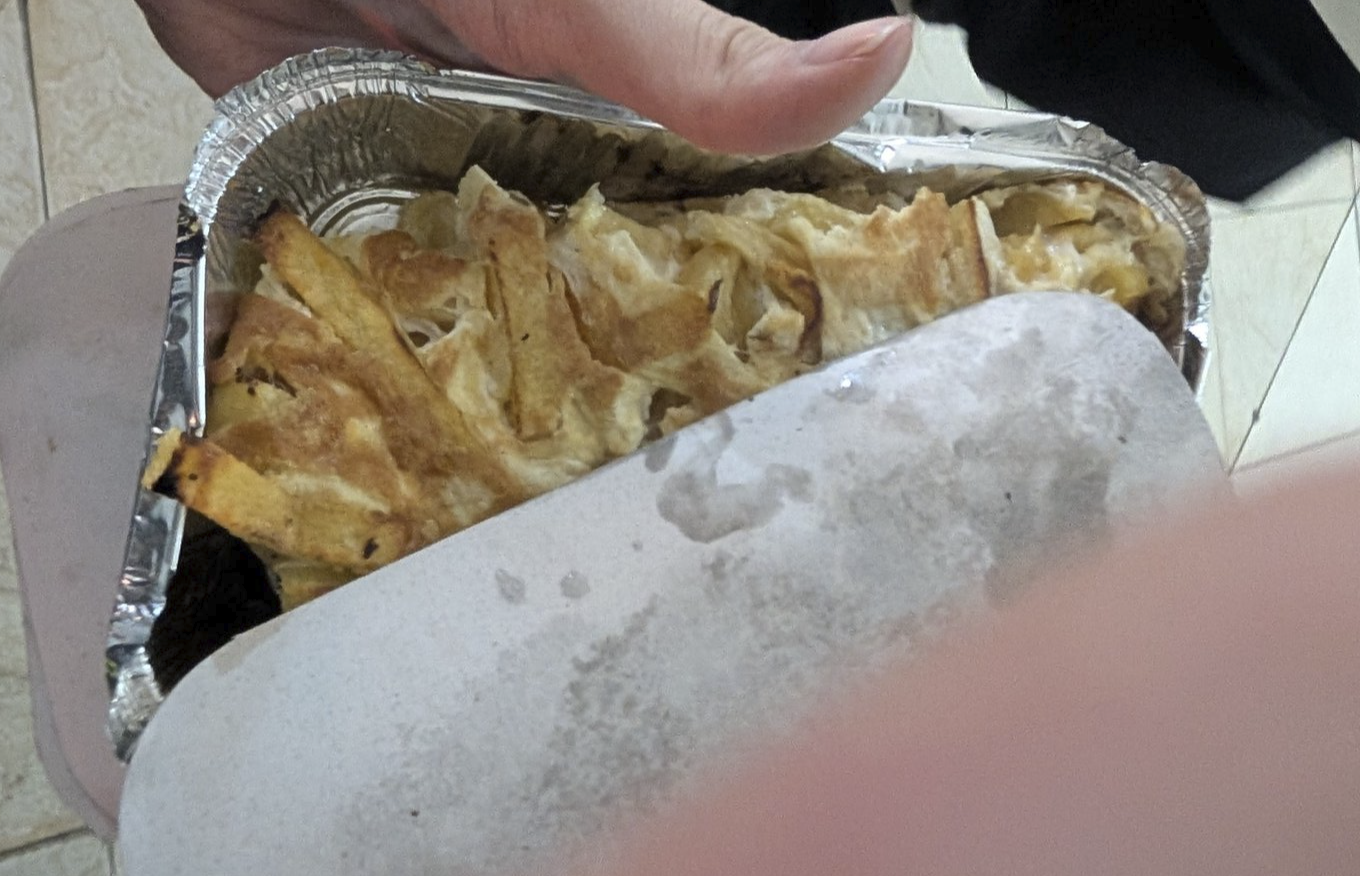
I finally reached Dar es Salaam around midnight. The bus terminated at Kariakoo, a busy district with a poor reputation for safety. Rather than arrive there late at night, I got off early and planned to use a ride-hailing app for the rest of the journey. The place where I left the bus did not feel reassuring either, and Uber would not work. I eventually found a car through Bolt. Late-night arrivals are best avoided when travelling overland in this part of Africa.
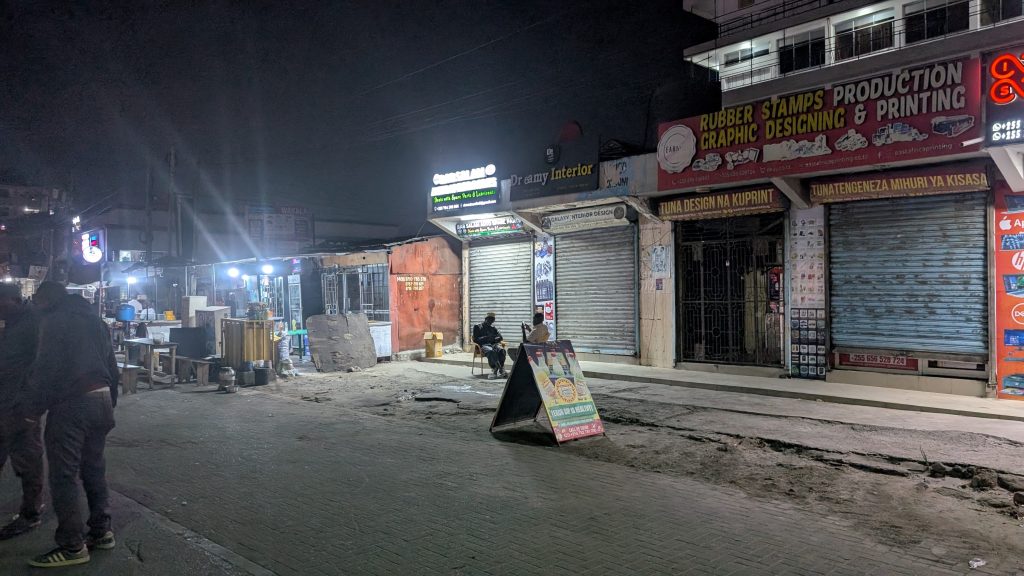
In Dar es Salaam, I stayed at L&J Modern Backpackers Kinondoni. It cost about USD 9 per night, included breakfast, and was comfortable enough to recommend. The next stage would begin with Dar es Salaam before continuing farther south.